Concrete Coring: The Essential Process Behind Safe and Precise Structural Modifications

Concrete coring is a specialized construction technique used to create precise circular openings in concrete structures for plumbing, electrical systems, HVAC installations, structural testing, and utility access. By combining advanced drilling equipment with technologies such as ground penetrating radar services and GPR concrete scanning services, contractors can safely locate hidden obstructions before drilling, ensuring accuracy, safety, and cost-effective project execution.
What Is Concrete Coring?
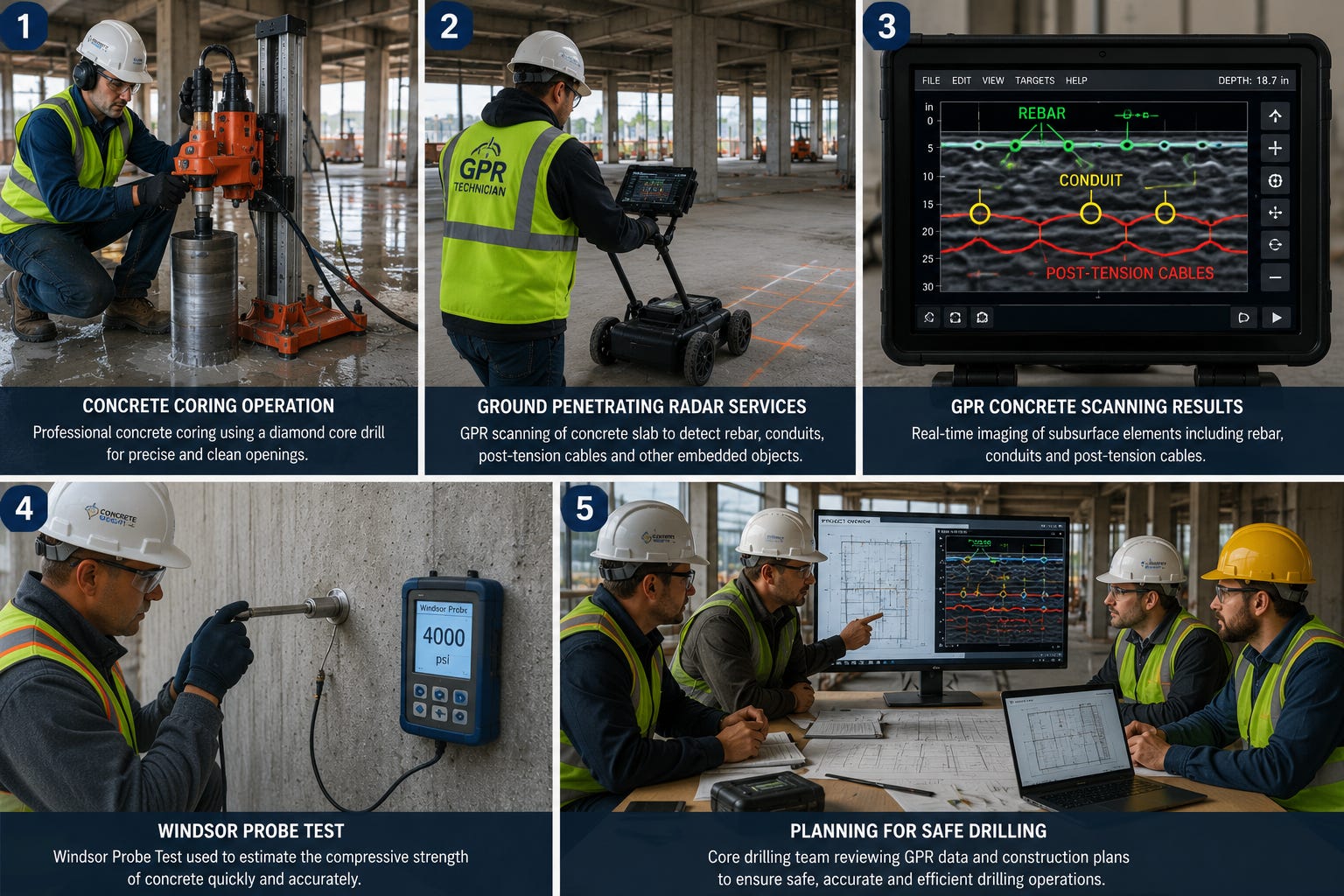
Concrete coring, also known as core drilling, involves removing a cylindrical section of concrete using a diamond-tipped drill bit. The process creates clean, accurate openings without causing unnecessary damage to surrounding structures.
Construction professionals use concrete coring for:
Plumbing pipe installations
Electrical conduit routing
HVAC system upgrades
Structural investigations
Utility penetrations
Material testing and analysis
Unlike traditional demolition methods, concrete coring provides a controlled and non-destructive solution for modifying existing concrete structures.
Why Concrete Coring Is Important in Modern Construction
Modern buildings contain complex networks of utilities embedded within concrete slabs, walls, and foundations. Drilling without proper investigation can damage rebar, post-tension cables, electrical conduits, or plumbing systems.
This is why professional contractors often combine coring with ground penetrating radar services before drilling begins.
Benefits of Concrete Coring
Precise and clean openings
Minimal structural disruption
Reduced project delays
Improved workplace safety
Cost-effective modifications
Suitable for residential, commercial, and industrial projects
The Role of Ground Penetrating Radar Services Before Coring
What Are Ground Penetrating Radar Services?
Ground Penetrating Radar (GPR) uses electromagnetic signals to detect objects hidden within concrete and below surfaces.
Before any core drilling project, technicians use GPR to identify:
Reinforcing steel (rebar)
Post-tension cables
Electrical conduits
Water lines
Voids and embedded objects
Practical Example
Consider a hospital renovation project where new medical gas lines need to pass through a concrete floor. A GPR scan identifies electrical conduits and structural reinforcement before drilling begins. This allows contractors to select a safe drilling location and avoid costly damage.
Without proper scanning, a single drilling mistake could interrupt critical hospital operations.
How GPR Concrete Scanning Services Improve Safety
Understanding GPR Concrete Scanning Services
GPR concrete scanning services provide detailed imaging of concrete structures without damaging the surface.
These scans help contractors:
Locate hidden utilities
Avoid structural damage
Verify safe drilling paths
Improve project planning
Reduce liability risks
Real-World Application
A commercial office building requires new plumbing penetrations through a post-tension slab. GPR scanning identifies tension cables hidden beneath the surface.
By adjusting the drilling location, the contractor avoids cutting a cable that could have resulted in major structural repairs and project delays.
Why Scanning Should Never Be Skipped
Skipping concrete scanning can lead to:
Damaged utilities
Structural weakening
Increased repair costs
Safety hazards
Construction delays
For this reason, scanning has become a standard best practice across the construction industry.
Choosing the Right Core Drilling Company
Not all contractors possess the equipment, experience, and technical expertise required for precision coring.
A professional core drilling company should provide:
Advanced Equipment
Modern diamond drilling systems deliver:
High precision
Faster drilling speeds
Reduced vibration
Cleaner openings
Experienced Technicians
Qualified operators understand:
Structural considerations
Reinforcement layouts
Safety requirements
Industry best practices
Integrated Scanning Services
The best contractors combine core drilling with GPR scanning to improve safety and accuracy.
Compliance and Documentation
Professional providers maintain:
Safety records
Inspection reports
Project documentation
Regulatory compliance standards
Understanding the Windsor Probe Test
What Is a Windsor Probe Test?
The Windsor Probe Test is a non-destructive or semi-destructive method used to estimate the compressive strength of hardened concrete.
A specialized probe is driven into the concrete surface, and the penetration depth is measured to determine relative strength.
Why It Matters
Engineers use the Windsor Probe Test to:
Assess concrete quality
Verify structural integrity
Evaluate aging structures
Support rehabilitation projects
Example Scenario
A facility manager plans to install heavy industrial equipment in an existing warehouse.
Before installation, engineers perform a Windsor Probe Test to verify that the concrete slab has sufficient strength to support the new load.
This assessment helps prevent future structural issues and ensures compliance with engineering specifications.
Common Applications of Concrete Coring
Plumbing Installations
Core drilling creates precise openings for water supply and drainage systems.
Electrical Systems
Contractors use coring to install conduits and cable pathways in concrete structures.
HVAC Projects
Heating, ventilation, and air conditioning systems often require penetrations through walls and slabs.
Structural Testing
Concrete cores can be extracted and analyzed to evaluate material quality and strength.
Infrastructure Projects
Bridges, tunnels, airports, and transportation facilities frequently rely on coring for upgrades and maintenance.
Best Practices for Successful Concrete Coring
Conduct a Site Assessment
Evaluate project requirements and structural conditions before drilling.
Perform Concrete Scanning
Use GPR technology to identify hidden hazards.
Verify Structural Conditions
When necessary, use testing methods such as the Windsor Probe Test to assess concrete strength.
Use Qualified Professionals
Choose an experienced core drilling company with a proven safety record.
Follow Safety Protocols
Proper safety procedures protect workers, structures, and project timelines.
Future Trends in Concrete Coring Technology
The construction industry continues to adopt advanced technologies that improve efficiency and accuracy.
Emerging trends include:
AI-assisted scanning analysis
3D subsurface mapping
Digital project documentation
Real-time drilling monitoring
Enhanced GPR imaging systems
These innovations are helping contractors make faster and more informed decisions while minimizing project risks.
Key Takeaways
Concrete coring creates precise openings in concrete structures for utilities, testing, and renovations.
Ground penetrating radar services help identify hidden obstacles before drilling.
GPR concrete scanning services improve safety, accuracy, and project efficiency.
The Windsor Probe Test helps assess concrete strength and structural integrity.
Hiring an experienced core drilling company reduces risks and improves project outcomes.
Combining scanning, testing, and professional drilling practices leads to safer construction projects.
Conclusion
Concrete coring plays a critical role in modern construction, renovation, and infrastructure development. Whether installing utilities, upgrading facilities, or evaluating structural conditions, precision drilling requires careful planning and expert execution. By incorporating ground penetrating radar services, GPR concrete scanning services, and Windsor Probe Testing into the process, contractors can significantly reduce risks while improving project accuracy and safety. Choosing a qualified core drilling company ensures that every drilling operation is completed efficiently, safely, and in compliance with industry standards.
Frequently Asked Questions (FAQs)
1. What is concrete coring?
Concrete coring is the process of drilling circular openings through concrete using diamond-tipped core drills.
2. Why are ground penetrating radar services used before coring?
They help locate hidden utilities, rebar, and post-tension cables before drilling.
3. What are GPR concrete scanning services?
These services use radar technology to inspect concrete and identify embedded objects without causing damage.
4. Is concrete coring safe?
Yes. When performed by trained professionals using proper scanning and safety procedures, concrete coring is highly safe.
5. What is the Windsor Probe Test?
It is a testing method used to estimate the compressive strength of hardened concrete.
6. Can concrete coring damage a structure?
Properly planned and executed coring minimizes structural impact and prevents unnecessary damage.
7. How deep can a core drill penetrate concrete?
The depth depends on equipment and project requirements, but modern systems can drill several feet deep.
8. When should GPR scanning be performed?
Before any cutting, drilling, coring, or demolition activity.
9. How do I choose a reliable core drilling company?
Look for experience, certifications, advanced equipment, safety records, and integrated scanning capabilities.
10. What industries use concrete coring services?
Construction, healthcare, manufacturing, infrastructure, education, transportation, and commercial real estate sectors commonly use coring services.